AI Logistics / 8 min read
By Pathmanathan Lathesh, Founder & Creative Technology Director, AlienX Engineering
Last updated: May 2026
Quick answer
The future of AI automation in logistics is connected, governed systems that handle documents, exceptions, customer status and reporting end to end, with predictive visibility surfacing issues earlier. Value compounds when AI integrates into existing operations and keeps humans accountable for high-impact decisions.
Key takeaways
- Logistics AI is moving toward connected automation across documents, exceptions, status and reporting.
- Predictive visibility will surface delays and bottlenecks earlier, not replace human judgement.
- Value compounds when AI is integrated into real operations and governed with logs and approvals.
Logistics is a perfect test for practical AI
Logistics companies live inside moving information. Shipments change, documents arrive late, customers ask for updates, routes shift, customs requirements vary and operations teams spend the day handling exceptions.
That makes logistics a strong fit for AI automation, but not because AI can magically run everything. The value is in helping teams see, sort and respond faster.
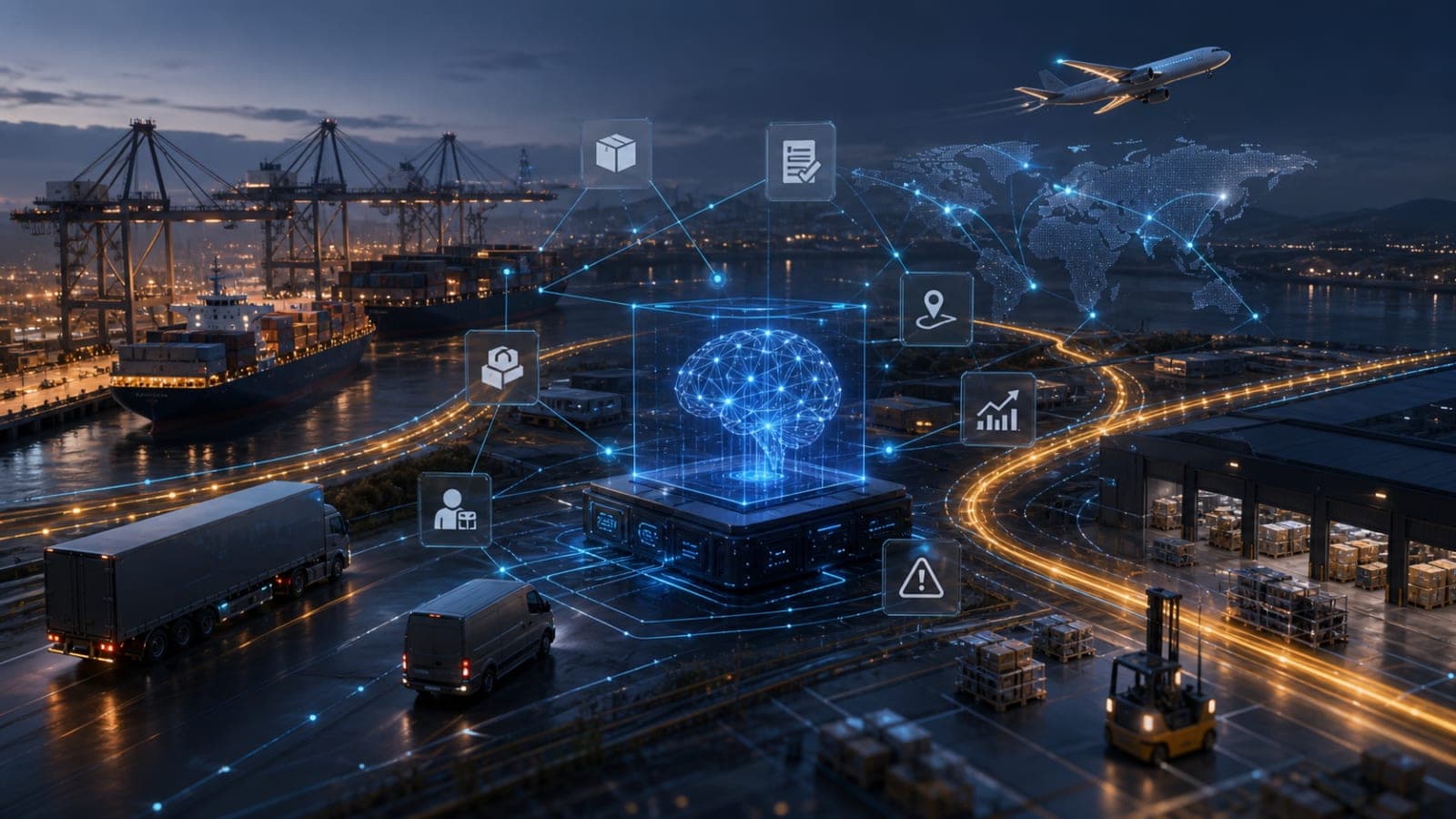
The future of logistics AI is not a single autonomous brain. It is a set of useful assistants inside dispatch, documentation, customer service, finance and operations reporting.
Exception handling will become the center
Most logistics work is easy until something goes wrong. A missing document, delayed truck, wrong address, customs issue or customer escalation can pull multiple people into a manual investigation.
AI can classify exceptions, summarize what changed, suggest the next action, draft customer updates and show the source data behind the recommendation.
This helps operations teams spend less time finding the problem and more time resolving it.
Documents are the quiet automation opportunity
Logistics still depends heavily on documents: invoices, bills of lading, customs forms, delivery notes, purchase orders and compliance records. Manual document handling is slow, error-prone and difficult to scale.
AI document workflows can extract fields, compare records, flag missing information and prepare tasks for review. The human remains responsible, but the first pass becomes faster.
This is one of the most realistic places for logistics companies to see measurable ROI because the pain is repeated every day.
Customer communication will get faster
Customers do not only want delivery. They want confidence. AI can help generate status updates, answer routine shipment questions, route complex requests and keep communication consistent across channels.
The important rule is honesty. AI should not invent certainty. It should use available shipment data, show confidence clearly and escalate when the answer needs a person.
The logistics companies that win with AI will be the ones that make customers feel informed without overwhelming staff.
Human control will stay essential
Logistics decisions affect cost, compliance and customer trust. Fully uncontrolled automation is risky. The stronger future is human-controlled automation: AI prepares, recommends, drafts and alerts, while accountable staff approve important actions.
That model gives companies speed without losing judgment. It also creates better data over time because decisions, exceptions and outcomes can be tracked.
In practice, the future belongs to logistics teams that treat AI as operational infrastructure, not a novelty tool bolted onto the side.
Frequently asked questions
What is the future of AI automation in logistics?
The future is connected, governed automation that spans document processing, exception handling, customer status updates and reporting, with predictive visibility that surfaces delays and bottlenecks earlier across the operation.
Will AI replace logistics teams?
No. AI is set to remove repetitive coordination work and surface issues sooner, while accountable people keep control of decisions that affect customers, cost and compliance through logs, sources and escalation.
What should logistics companies build first?
Start with high-friction, high-volume workflows such as shipment status copilots, document extraction and exception dashboards, integrated into the real logistics workflow so adoption and ROI can be measured before expanding.
Related services
Continue reading
Planning a project like this?
AlienX Engineering designs and builds AI automation, SaaS, ERP and CGI systems for enterprises across the UK, USA, Canada, UAE and Qatar. Book a strategy call to scope yours.